Sixteen Bodies, One Brain: The Mumbai Backup Dancers American Music Videos Keep Quietly Copying
Photo: Edgar Degas, Public domain, via Wikimedia Commons
You know the frame even if you can't name a single person in it. Sixteen women in identical gold, one horizontal line, one hit of the dhol, and every head snaps left at the same millisecond. No cut. No safety net. No close-up to bail anyone out. It reads as chaos to people who've never tried it, and as pure engineering to the people who have.
That frame is the load-bearing wall of Hindi cinema, and it has been quietly imported into American pop over the last few years. Directors shooting in Los Angeles and Atlanta are staging ensemble numbers again, less backup-dancer-as-moving-furniture and more chorus-line-as-the-actual-event. If you've watched a music video lately and felt an odd urge to rewind to the wide shot, this is the reason.
The 4 A.M. Call Sheet
Mumbai's dance economy runs on a few square miles of Andheri West. Rehearsal halls off Aram Nagar, the ones with the mirror that's been re-silvered twice and the ceiling fan that has never worked, book out weeks in advance. On an audition morning, 250 dancers can show up for 12 slots. They arrive with a headshot, a measurement card, a phone full of performance clips, and footwear that has survived more floors than most people have visited.
Nobody's discovered here. They're chosen, then chosen again, then chosen a third time after the choreographer's assistant cuts four people for being half a beat behind in a formation that won't even make the final edit.
Sixteen Hours, Thirty Takes, One Broken Fan
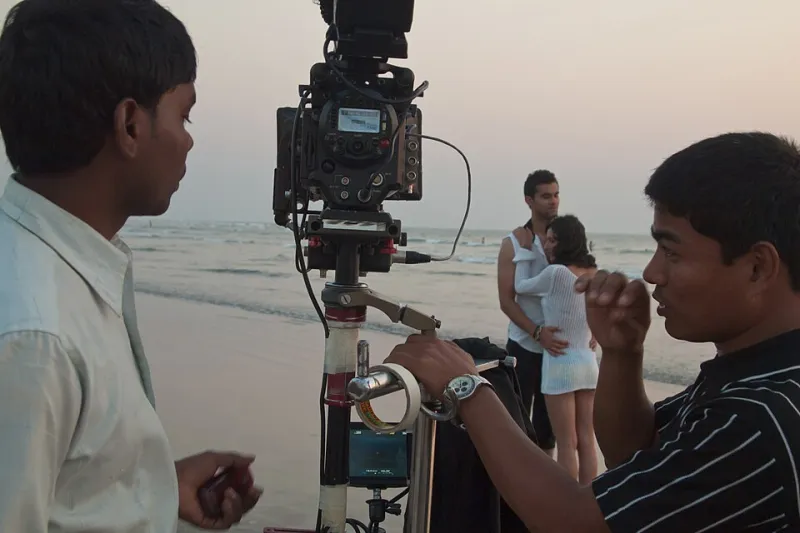
A Bollywood number is not shot in a day, and often not in three. A day player in the chorus can be on set from a pre-dawn van ride to a post-midnight wrap, repeating the same eight counts until the director has the coverage they want. Costume changes happen in corridors. Water breaks are negotiable. The famously unreported part is the repetition: assistant choreographers drilling counts on a concrete floor between takes while the lighting crew resets, the whole ensemble holding the shape of the routine in their bodies like a memorized phone number.
Pay varies wildly by tier and production, but the working reality is that most of these dancers are freelancers stitching together a month of shoots, wedding sangeets, corporate gigs and teaching classes. They are the reason the number looks effortless. They are almost never the reason the number gets a poster.
The Ensemble Is the Choreography
Here's the part Western crews tend to misread. In a Hindi film song, the chorus isn't decoration. It's narrative. The ensemble is the wedding, the village square, the monsoon, the goddess, the crowd that the hero is trying to impress. Change the formation and you change the meaning. Block the chorus badly and the song has nothing to say, no matter how good the lead is.
That's why the geometry matters so much, and why the wide overhead shot keeps showing up. The formation changes are the story beats. When a director like the ones who built the modern Mumbai number in the Farah Khan tradition puts forty dancers into a shape that pivots on one count, they aren't padding the runtime. They're writing.
What American Directors Started Stealing
Look closely at the staging in a lot of recent American pop videos and you can spot the borrowings: the locked-off one-take walk-through with dancers peeling off behind the artist, the human mandala drone shot, the unbroken run from a hallway into a courtyard where the ensemble has somehow already assembled. TikTok's dance economy made the ensemble cool again. K-pop normalized the formation change. Bollywood, it should be said, has been running this playbook since long before either.
What's genuinely new in 2026 is the ambition. US choreographers are staging bigger groups, holding the wide shot longer, and letting the chorus carry the drop instead of cutting away to a close-up of a snare drum. Some of that is budget. Some of it is taste. Most of it is somebody in a room finally watching the source material instead of the parody of it.
Where the Borrowing Goes Sideways
Two things get lost in translation, and both are about people. The first is credit. Bollywood's chorus dancers are under-credited at home, and American productions have cheerfully imported the choreography while importing none of the visibility. If the ensemble is the star of the shot, put them in the description.
The second is rehearsal. You cannot fake a sixteen-body formation change in post. Mumbai solves this with brutal repetition and a deep bench of dancers who learned the routine before anyone got on a plane. Western productions tend to solve it with a two-day rehearsal and a prayer, then cut around the prayer.
The Real Main Character
So next time a number opens on a wide shot of a courtyard and you feel that little jolt, remember the 4 A.M. call, the measurement card, the concrete floor, the take that wasn't the one they used. The lead gets the close-up. The chorus builds the frame that makes the close-up mean anything. That's not the background. That's the spine of the whole thing.