The Algorithm Knows You're a Bollywood Stan Before You Even Do
The Algorithm Knows You're a Bollywood Stan Before You Even Do
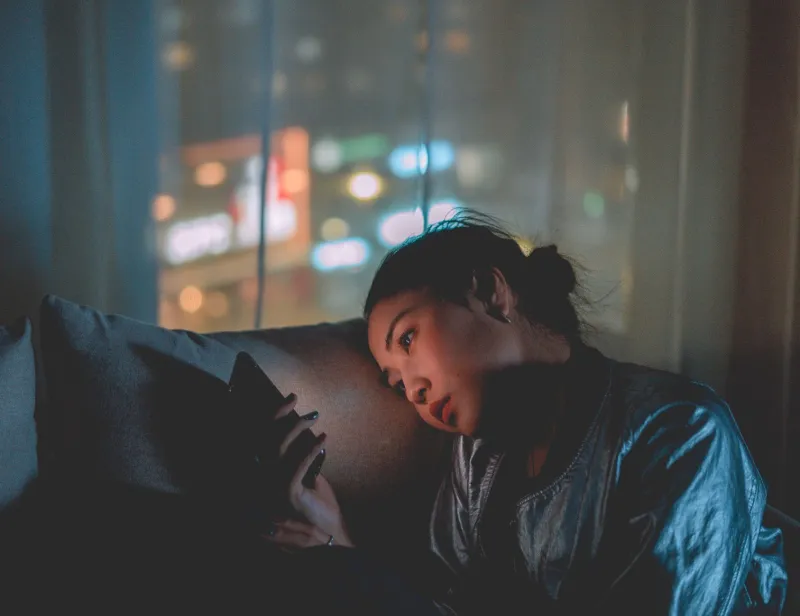
It starts innocuously enough. You're scrolling TikTok after a long day, minding your business, when a clip of a breathtaking dance sequence from some movie you've never heard of stops your thumb cold. You watch it twice. Maybe three times. You don't double-tap — you're not that committed — but the algorithm? Oh, it noticed. It always notices.
Two weeks later, you're DMing your college roommate links to obscure 2000s Bollywood soundtracks, you've added three Hindi films to your Letterboxd watchlist, and you just spent forty-five minutes learning the name of a choreographer from a 1998 film. Nobody told you to do this. You didn't Google it. It just happened.
Welcome to the Bollywood pipeline — and trust, you are far from alone.
The Rabbit Hole Is Real, and It Has a Name
Social media researchers have started paying serious attention to what they're calling "cultural drift" — the phenomenon where users from one cultural background gradually migrate toward content ecosystems rooted in entirely different traditions, not because they sought it out, but because engagement signals quietly redirected them there.
Bollywood content is one of the most documented examples of this happening in real time on TikTok and Instagram Reels. A 2023 report from a digital culture research group at USC found that Hindi film content had one of the highest "secondary engagement" rates on short-form video platforms — meaning people who weren't originally searching for it ended up spending significantly more time with it than with content they did intentionally seek out.
That's not an accident. That's the algorithm doing exactly what it was designed to do: finding the thing that hooks you before your conscious brain has even formed a preference.
"The engagement patterns around Bollywood clips are genuinely unusual," says one social media data analyst who asked to remain unnamed because her employer restricts public commentary. "The rewatch rates are high, the save rates are high, and users tend to follow a very predictable escalation path — from dance content, to romantic scenes, to full film recommendations, to fan edits, to original language content. It's almost like a funnel."
A funnel. For Bollywood. Built by math. Running on your phone.
Gen Z Is the Target, but Not for the Reasons You Think
Here's the thing about Gen Z and Bollywood that most mainstream media coverage gets completely wrong: this isn't just about aesthetic appeal or exotic novelty. The creators driving Bollywood content on TikTok are way more sophisticated than that framing suggests.
Take Priya M., a 24-year-old content creator based in Atlanta who runs a Bollywood breakdown account with over 340,000 followers. She started posting in 2021 mostly for the South Asian community at her university. Within eight months, her analytics showed that nearly 60 percent of her audience was non-South Asian Americans between the ages of 18 and 26.
"I didn't change what I was making," she says. "I was still explaining the same emotional arcs, the same cultural context, the same reasons why a particular song hits different in the third act of a film. But suddenly all these people from Ohio and Texas were showing up in my comments saying they'd cried at a movie they'd watched with subtitles at 2 AM."
What Priya stumbled onto — and what the algorithm amplified — was something that transcends cultural specificity: emotional legibility. Bollywood, at its core, deals in feelings that are enormous, unambiguous, and unapologetically displayed. In a media landscape where American content increasingly codes vulnerability as weakness, a hero weeping openly in the rain or a family reunion scored with a full orchestral swell hits differently. It hits hard.
"Gen Z is emotionally exhausted and emotionally hungry at the same time," says Dr. Leena Varghese, a media studies professor at NYU who studies diaspora content consumption. "Bollywood offers them a space where big feelings are not just permitted — they're celebrated. The algorithm isn't creating that desire. It's identifying it and feeding it."
The Creators Hacking the System (With Love)
Not every Bollywood-to-algorithm story is accidental. A growing community of content creators — both South Asian Americans and enthusiastic converts — have become genuinely skilled at packaging Bollywood content for maximum algorithmic reach without stripping it of its cultural substance.
Marcus T., a 27-year-old Black creator from Houston who goes by @marcuswatchesbollywood, has built an audience of nearly half a million followers by doing live reaction videos to classic Hindi films. He came to Bollywood through a TikTok rabbit hole of his own — a clip of the iconic train station sequence from Dilwale Dulhania Le Jayenge popped up on his For You page in 2022, and he was never quite the same.
"I remember thinking, why does this feel more emotionally satisfying than most of what I've watched in years?" he says. "And then I thought — other people need to see this. So I just started filming myself watching."
His videos routinely hit millions of views. The comment sections are a chaotic, joyful mix of South Asian fans who grew up with these films and American newcomers experiencing them for the first time, all processing their feelings together in real time. It's the kind of cross-cultural moment that no marketing team could manufacture.
"The algorithm brought us all together," Marcus says, half-laughing. "But the movies kept us there."
What Your For You Page Is Actually Telling You
So what does it mean when your feed starts serving you Bollywood content unprompted? According to Dr. Varghese, it's worth taking seriously as a form of self-knowledge.
"The algorithm is a mirror," she explains. "It reflects your micro-behaviors back at you — the extra second you spent on a particular clip, the way you slowed your scroll for a specific kind of image. It's not magic. It's just paying closer attention to you than you pay to yourself."
In that sense, the Bollywood pipeline isn't really about Bollywood. It's about what you were already looking for: spectacle with emotional depth, stories that take feelings seriously, music that doesn't apologize for being overwhelming, and a visual language that treats beauty as a legitimate form of meaning-making.
Bollywood has been doing all of that for decades. The algorithm just figured out that you needed it.
The Bigger Picture
There's something genuinely remarkable happening here that goes beyond content trends or platform metrics. American Gen Z is, largely through the invisible machinery of social media, developing real fluency with a cinematic tradition that their parents' generation largely ignored. They're learning names, contexts, histories — not through a class or a documentary, but through the slow accumulation of clips, reaction videos, fan edits, and comment section conversations.
Is the algorithm a perfect guide? Obviously not. It flattens, it repeats, it optimizes for engagement over depth. But as an on-ramp to something richer? It's doing a surprisingly decent job.
Your TikTok For You page might not replace your therapist. But if it's been quietly nudging you toward a three-hour melodrama that makes you sob in ways you didn't know you needed? Maybe give it a little credit.
The algorithm saw something in you. Mumbai's film industry gave it the content to match. The rest, as they say, is your watch history.