Item Numbers Aren't What You Think They Are — and American Culture Critics Are Finally Starting to Get It
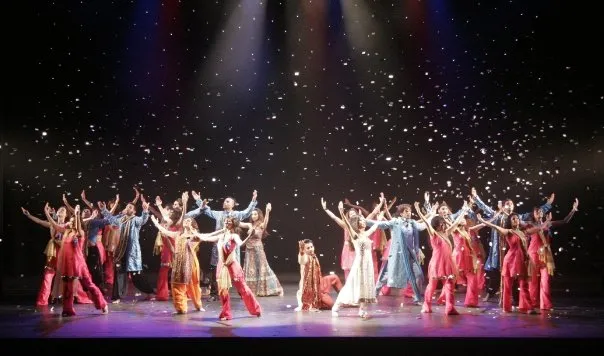
Photo: Flexfxproductions, CC BY-SA 3.0, via Wikimedia Commons
If you've spent any time in Bollywood's orbit, you know the moment. The plot pauses. The lighting shifts. A performer — often a major star making a special appearance — walks into the frame with an energy that is completely, deliberately, gloriously separate from the rest of the film. The song is built for spectacle. The choreography is unapologetically sensual. The camera doesn't look away. And the audience goes absolutely electric.
This is the item number. And it has been one of Hindi cinema's most debated, most beloved, and most misunderstood traditions for decades.
Now, American audiences are getting their first real look at this format — and the conversation it's sparking is more sophisticated, more honest, and more necessary than anyone anticipated.
What an Item Number Actually Is
The term itself is worth unpacking, because the American instinct is often to flinch at it. In Bollywood parlance, an "item" originally referred to a standalone musical performance inserted into a film — a set piece that existed somewhat outside the narrative, performed by a guest artist rather than the main cast. Over decades, it evolved into a specific genre of song-and-dance spectacle, typically featuring a female performer at the center of a high-energy, visually bold production number.
Famous examples include Madhuri Dixit's iconic "Dhak Dhak" energy from the early '90s, Katrina Kaif's jaw-dropping "Sheila Ki Jawani," and Deepika Padukone's absolutely incendiary "Lovely" — performances that became cultural phenomena, launched careers, and generated conversations that lasted years.
The debate around them is as old as the format itself. Critics — including many within India — have argued that item numbers reduce women to objects of spectacle, prioritizing male gaze over female agency. Defenders counter that these performances are executed by artists who chose them, command enormous fees for them, and often use them to demonstrate a range of skill and charisma that their regular film roles don't allow.
Both arguments have merit. And that tension is exactly why American critics are suddenly paying attention.
Why American Feminism Is Circling Back to This Conversation
Here's the context that matters: American entertainment is in the middle of its own messy, unresolved argument about female sexuality and performance. The post-#MeToo era has created a cultural environment where the line between empowerment and exploitation is debated constantly — in music videos, in award show performances, in film, in advertising. And the conversation often gets stuck in a binary that serves nobody: either a woman's sexuality onscreen is inherently empowering because she chose it, or it's inherently exploitative because the industry profits from it.
Bollywood's item number tradition, viewed with fresh eyes, offers something more interesting than either of those poles. It offers complexity.
The women who perform item numbers in Bollywood are not passive. They are often the most powerful people on set during those sequences — directors defer to them, choreographers build around their instincts, and the entire production is in service of their performance. At the same time, these numbers exist within an industry that has its own complicated history with gender dynamics, which means the power is always partial, always contested, always worth examining.
That's not a contradiction. That's just what honest art looks like.
The Autonomy Argument
One of the most compelling points being made by American critics who've taken a closer look is about artistic choice and what it actually means in practice.
When Priyanka Chopra — now a globally recognized figure with a substantial American fanbase — performed item-adjacent numbers in her Bollywood career, she wasn't doing so despite her ambitions. She was doing so as part of them. These performances were career-defining moments that demonstrated versatility, physicality, and star power in ways that conventional dramatic roles sometimes couldn't.
The same logic applies to Aishwarya Rai, Mallika Sherawat, and dozens of other performers who used the item number format as a vehicle for the kind of commanding, full-bodied artistic expression that cinema rarely grants women in the same way.
American culture critics, particularly those working in the space where feminism meets pop culture analysis, are noting that this is a fundamentally different framing than the one that dominates discussions of, say, a female pop star's music video. In those conversations, the artist's intent is often dismissed or minimized. In the item number discourse, the performer's agency is central to the debate — which is, arguably, a more honest starting point.
The Uncomfortable Part Nobody Wants to Skip
A genuinely useful conversation about item numbers has to include the parts that are harder to defend. There is a documented history in Bollywood of item numbers being used to exploit newer, less powerful performers who lacked the leverage to negotiate their participation on equal terms. There are songs with lyrics that range from playfully bold to genuinely degrading. There are productions where the "empowerment" framing was applied retroactively to justify something that looked a lot more like exploitation in the moment.
Ignoring these realities would be intellectually dishonest, and the American critics engaging most thoughtfully with this topic aren't ignoring them. They're using the item number as a case study for a broader argument: that context matters more than category. That the same format can be, at different times and in different hands, both liberating and limiting — and that refusing to hold both truths simultaneously is what keeps these conversations shallow.
What This Debate Is Teaching American Entertainment
Perhaps the most interesting thing about the item number conversation is what it reveals about American entertainment's own blind spots.
Hollywood has its own version of the female performance-as-spectacle — it just tends to be less honest about what it is. The sexualized action heroine, the love interest who exists mainly to be desired, the female musician whose visual presentation is constantly policed and commented on — these are all variations on the same dynamic, packaged in ways that feel more familiar and therefore less examined.
Bollywood, with the item number, at least names the thing. It doesn't pretend the spectacle isn't spectacle. And in that naming, it creates space for the conversation that American entertainment keeps having around the edges but rarely has directly.
That directness — that willingness to be upfront about what a performance is and then argue about what it means — is something American culture critics are finding genuinely valuable. Not because Bollywood has all the answers, but because it's asking the questions out loud.
And right now, out loud is exactly where this conversation needs to be.