Forget the Parenting Books — Bollywood's Fierce Moms and Mumbai's Joint Family Magic Are Changing How American Women Raise Their Kids
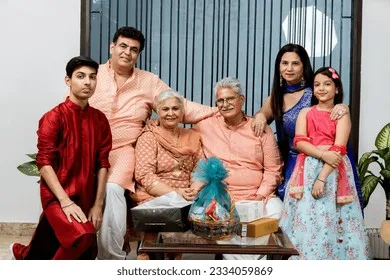
Photo: Indian grandmother mother and child multi-generational family warm home, via www.shutterstock.com
Somewhere between the third parenting podcast episode and the fourth self-help book on raising emotionally resilient children, American mothers collectively exhaled and said: enough. The hyper-optimized, Pinterest-perfect, schedule-every-second approach to raising kids has left a generation of mothers exhausted, isolated, and honestly — a little bitter about the whole deal. So where are they turning instead? Bollywood. And more specifically, to the kind of ferociously loving, community-rooted parenting philosophy that has been quietly thriving in Mumbai households for generations.
This isn't just a vibe shift. It's a full-blown cultural reckoning.
The Bollywood Mom: Misunderstood Icon or Parenting Genius?
If you've watched even a handful of Hindi films, you know her. She's the woman who holds the entire family together with one hand while cooking for twelve people with the other. She cries at the right moments, disciplines without flinching, and somehow always knows what her kids need before they do. American audiences used to laugh at her — she was the dramatic trope, the emotional manipulator, the over-involved mother-in-law.
But Gen Z is watching those same scenes and seeing something completely different. They're seeing a woman with power. A woman whose emotional intelligence isn't a weakness but her greatest strength. A woman who doesn't parent in isolation — she parents as part of a living, breathing, multi-generational ecosystem where wisdom flows freely between grandparents, aunts, cousins, and neighbors.
The Bollywood mom isn't a helicopter parent. She's not obsessively tracking developmental milestones or stress-ordering organic snack packs on Amazon. She's plugged into something older and arguably more effective: the community.
Joint Family Living Is Having Its American Moment
Here's a number that might surprise you: according to Pew Research, multi-generational households in the US have been steadily climbing since the 1970s, with a significant spike during and after the pandemic. American families are rediscovering something that Mumbai households never abandoned — that raising children is not a two-person job, and it was never meant to be.
In Mumbai's joint family structure, a child doesn't just have parents. They have a grandmother who tells them stories that carry decades of lived experience. They have an uncle who teaches them how to lose gracefully. They have cousins who are essentially built-in best friends. The emotional load is distributed. Nobody burns out because nobody is doing it alone.
American mothers who've started embracing this model — whether that means moving closer to extended family, building intentional community with neighbors, or simply rejecting the myth that needing help is a failure — are reporting something radical: they're actually enjoying motherhood more.
That's not a small thing. That's huge.
Kismet for Kids: The Philosophy Behind the Parenting
There's also something deeply philosophical at play in the way Bollywood-era Indian parenting approaches childhood development. Where American parenting culture tends to treat a child's future as a project to be engineered — every extracurricular, every tutoring session, every carefully curated playdate building toward some optimized adult outcome — the Indian matriarchal tradition carries a softer, more trusting energy.
There's an implicit understanding that children are whole people, not blank slates to be programmed. That love, expressed loudly and without apology, is never too much. That feeding someone well is an act of profound care, not just nutrition delivery. That discipline and warmth are not opposites — they're the same thing, depending on the moment.
American moms scrolling through Bollywood content on YouTube and Instagram are absorbing this philosophy in real time, often without even realizing it. A grandmother singing to a baby in a Hindi film. An aunt swooping in to comfort a crying teenager while the parents are overwhelmed. A family meal that lasts three hours because nobody is in a rush to get back to their individual screens. These images are landing differently now. They feel like relief.
What American Mothers Are Actually Stealing From Mumbai
Let's get specific. The practical borrowings are fascinating.
First, there's the concept of collective emotional labor — the idea that processing a child's big feelings doesn't always have to fall on the parents. Grandparents, trusted family friends, older siblings — anyone in the village can hold space. American moms are starting to ask for this help without guilt, and it's changing everything.
Second, there's the unapologetic prioritization of food as love. Mumbai motherhood culture treats cooking for your family as a sacred act, not a chore to be optimized away with meal kit subscriptions. More American moms are reclaiming the kitchen not as a burden but as a connection point — and their kids are eating better and feeling more loved. Win-win.
Third — and this is the big one — there's the fierce, public, completely unashamed expression of maternal pride and love. Bollywood moms don't do emotional minimalism. They show up, they show out, and they make sure their kids know exactly how loved they are. In a culture where American parenting advice often warns against "too much" praise or affection, this full-throttle love is genuinely revolutionary.
The Backlash Is Already Here — and It's Missing the Point
Of course, any time American culture starts borrowing from South Asian traditions, the discourse gets complicated. Critics are quick to point out that joint family living also comes with patriarchal structures, complicated in-law dynamics, and pressures that many South Asian women have spent decades trying to escape. That's a real and valid conversation.
But the American mothers drawn to this philosophy aren't importing the whole package wholesale. They're doing what good cultural borrowing always does — taking the wisdom, leaving the baggage, and adapting it to their actual lives. The point isn't to replicate a Mumbai household in a Chicago suburb. The point is to ask a better question: who is in my village, and am I actually letting them help?
That question, inspired by generations of Bollywood matriarchs who knew the answer before anyone thought to ask it, might be the most important parenting shift happening in America right now.
And honestly? The Bollywood mom has been waiting for this recognition for decades. She's not even surprised.