Your Coffee Shop Is Lying to You — Real Mumbai Chai Is the Drink Americans Didn't Know They Were Desperately Missing
Your Coffee Shop Is Lying to You — Real Mumbai Chai Is the Drink Americans Didn't Know They Were Desperately Missing
Let's be honest for a second. That "chai latte" you've been ordering at your neighborhood coffee chain? The one that tastes like warm cinnamon milk with a vague memory of spice? That's not chai. Not even close. Real Mumbai masala chai — the kind that's been waking up an entire subcontinent for centuries — is a completely different creature, and it's finally making its way into American cities with the kind of momentum that's turning casual sippers into full-on devotees.
Across the country, a new wave of South Asian-owned tea bars, Bollywood-themed cafés, and indie chai shops is rewriting what Americans expect from a hot drink. And honestly? The timing couldn't be more perfect.
What Makes Mumbai Chai Genuinely Different
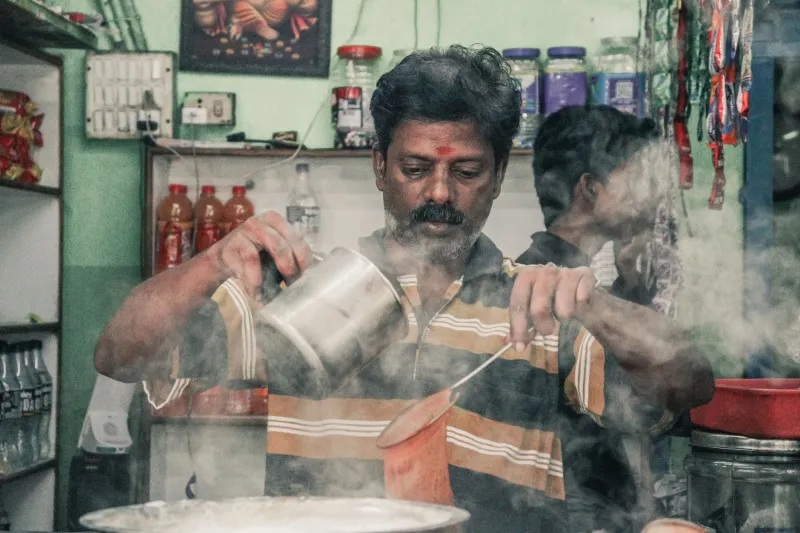
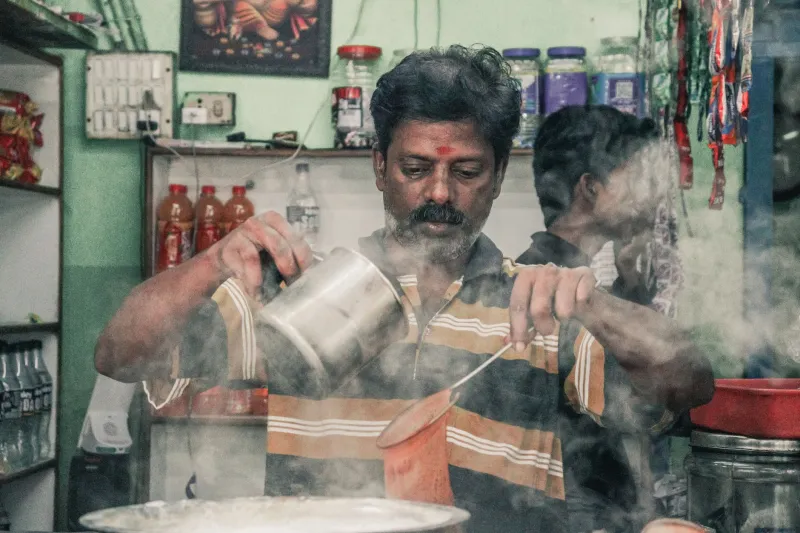
Here's the thing about authentic masala chai that most coffee shop menus completely miss: it's not a flavoring. It's a process. In Mumbai, chai is brewed by simmering loose black tea — usually a strong Assam or CTC variety — directly in a mixture of water and whole milk. Into that simmering pot goes a personal arsenal of spices: freshly crushed cardamom, a knob of ginger, cloves, black pepper, sometimes a cinnamon stick, occasionally a pinch of fennel. The whole thing is cooked low and slow until it reduces into something thick, aromatic, and borderline aggressive in the best possible way.
Then it gets poured through a strainer from a height — that dramatic pour you've seen on Instagram — which aerates the tea and creates a subtle froth on top. No espresso machine required. No syrups. No fifteen-step order.
The result is a drink that's simultaneously bold and comforting, complex and completely approachable. It tastes like someone's grandmother made it specifically for you.
The Shops Changing the Game
In Jersey City, New Jersey, a small shop called Kadak Chai Co. has been packing in lines out the door since it opened, with owner Priya Mehta — who grew up in Andheri, Mumbai — refusing to compromise on a single ingredient. "People come in expecting the Starbucks version and they take one sip and their whole face changes," she laughs. "That's the moment I live for. That's when they get it."
Mehta grinds her spices fresh every morning, sources her tea directly from a Darjeeling estate, and uses full-fat milk because, as she puts it, "cutting corners on chai is a crime in my family." Her shop's walls are covered in vintage Bollywood film posters, and a playlist of classic Hindi film songs runs all day. The vibe is unapologetically Mumbai, and American customers are absolutely eating — or rather, drinking — it up.
Out in Los Angeles, a Bollywood-inspired pop-up called Filmi Chai has been rotating through different neighborhoods, pairing small-batch masala chai with Indian street snacks and curated playlists from Hindi cinema's golden era. Co-founder Aakash Sharma says the concept started as a passion project and turned into something he genuinely didn't expect. "We thought maybe a few desi folks would show up for nostalgia," he admits. "But we're seeing everyone — people who've never been to India, people who didn't grow up with chai at all — and they're coming back every single weekend."
In Chicago's Logan Square neighborhood, a café called Tapri (the Hindi word for a roadside tea stall) has built a cult following by serving chai in small clay cups called kulhads — a traditional Mumbai street-food touch that biodegrades naturally and adds an earthy flavor to the tea. Owner Sunita Rao says the kulhads alone spark twenty conversations a day. "People want to know everything. What is this cup? Why does it taste different? Where does this come from? Chai becomes a whole story, not just a drink."
Why American Customers Are Completely Hooked
Ask any regular at these spots what keeps them coming back and you'll hear a version of the same answer: it makes them feel something. In a coffee culture increasingly dominated by fast, impersonal, algorithmically optimized beverages, masala chai hits different because it carries weight — cultural weight, sensory weight, the weight of a tradition that's been refined across generations.
There's also the caffeine conversation. Chai gives you a sustained, warm energy that doesn't spike and crash the way an espresso shot does. The spices — particularly ginger and black pepper — have genuine anti-inflammatory properties that wellness-minded Americans are paying close attention to. And the ritual of it, the fact that real chai takes time and intention to make, feels like a deliberate act of slowness in a culture that's desperate for exactly that.
Marissa Chen, a 31-year-old graphic designer in New York who found her way to a Mumbai-style chai bar through a friend's recommendation, says she's completely rearranged her morning routine around it. "I used to spend eight dollars on a cortado every single day without thinking," she says. "Now I go to this little chai place two blocks away and I sit there for twenty minutes and just drink my chai and it genuinely sets my whole day up differently. I don't know how to explain it except that it feels real."
The Bollywood Effect
It would be impossible to talk about this trend without acknowledging Bollywood's quiet cultural influence in the background. Chai has been a fixture of Hindi cinema for decades — it's the drink characters share when they fall in love, argue with their families, process heartbreak, and celebrate victories. That cultural coding travels. As Bollywood's global reach expands through streaming platforms, American audiences are increasingly curious about the textures of everyday Indian life that show up on screen, and chai is one of the most visible and accessible entry points.
Some of the newer chai bars are leaning directly into that connection, creating spaces that feel like a film set from a classic Mumbai romance — warm lighting, Bollywood music, the scent of cardamom hanging in the air. It's immersive in a way that a standard coffee shop simply cannot compete with.
How to Find Your Mumbai Chai Moment
If you haven't already stumbled into one of these spots, here's your sign to actively go looking. Search for South Asian-owned tea shops, masala chai bars, or Indian street food cafés in your city. Look for places that brew chai to order rather than pouring it from a pre-made concentrate. Ask if they use whole spices. Ask where their tea comes from. The shop owners who are doing this right will absolutely want to talk about it — and that conversation alone is part of the experience.
And if you're feeling adventurous, try making it at home. A simple version requires black tea, whole milk, grated ginger, cardamom pods, and sugar. Simmer everything together for five minutes, strain, and pour. It won't be exactly like Priya Mehta's version or Sunita Rao's kulhad chai — but it'll be a start. And once you've tasted the real thing, that watery chai latte at the airport is going to feel like a very different kind of loss.
Mumbai's been keeping this secret for generations. America is finally in on it.