3 AM and Starving? Mumbai's Midnight Street Food Scene Is Rewriting America's After-Hours Menu
3 AM and Starving? Mumbai's Midnight Street Food Scene Is Rewriting America's After-Hours Menu
Let's be honest. The American late-night dining experience has been coasting on mediocrity for decades. A sad drive-through window. Soggy fries under heat lamps. A slice of lukewarm pizza that tastes vaguely of regret. Night owls in this country have been settling — and they've known it.
Somewhere on the other side of the world, though, midnight is when the real party starts. In Mumbai, the hours between 11 PM and 4 AM aren't a desperate scramble for whatever's still open. They're a full-on culinary event. And now, American chefs and restaurateurs who've tasted that magic are refusing to let it stay overseas.
Mumbai After Dark: A Food Culture That Never Clocks Out
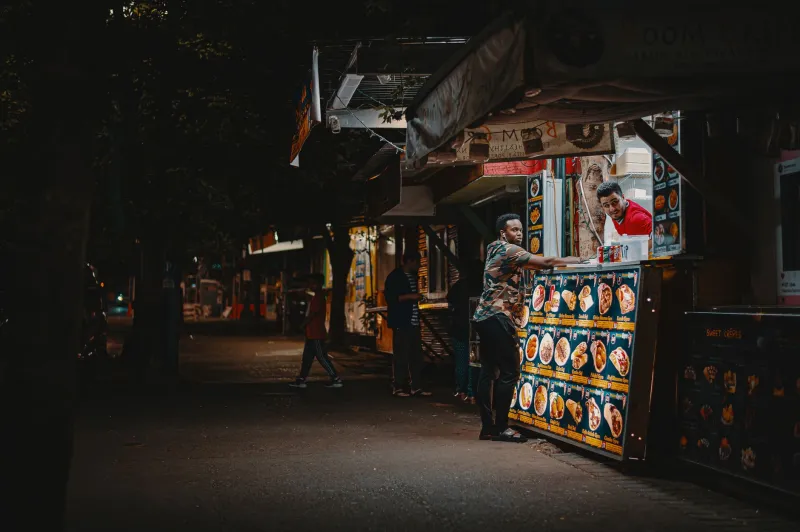
To understand why this matters, you have to picture what a Mumbai midnight actually looks like. Film studios in Andheri and Juhu wrap late shoots, and the moment those sets go dark, the streets outside light up with food carts that have been waiting patiently for exactly this moment. Kebab stalls fire up their grills. Pav bhaji vendors — those iconic buttery, spice-loaded vegetable mash situations served on soft bread rolls — start their massive iron tavas sizzling. Biryani pots that have been slow-cooking for hours finally get uncovered.
This isn't desperation food. It's intentional, celebratory, deeply social eating. Bollywood actors, crew members, auto-rickshaw drivers, and college students all end up at the same cart, elbowing each other over plates of bhel puri and arguing about which stall has the better chutney. The food is bold, unapologetic, and built for people who are fully awake and fully alive at an hour when most Americans are staring at a fast-food app wondering if the wait is worth it.
Spoiler: it usually isn't. But that's changing.
The Chefs Who Caught the Midnight Bug
Chef Priya Anand grew up splitting her summers between her family home in New Jersey and her grandparents' apartment in Bandra. She remembers being fourteen, sneaking out to the street below at midnight with her cousins to eat vada pav from a cart that her grandmother pretended not to know about. That memory, she says, became the entire emotional foundation of Masala After Hours, her late-night pop-up concept that launched in Brooklyn two years ago and now draws lines around the block on Friday and Saturday nights.
"American late-night food is designed for damage control — something to soak up alcohol, something cheap and fast," she told us. "Mumbai's midnight food isn't damage control. It's a destination. People go because it's midnight, not despite it."
Her menu leans hard into that philosophy. Seekh kebabs served with a green chutney that has enough heat to make you genuinely reconsider your life choices. A pav bhaji loaded with butter in quantities that would make a cardiologist nervous but a Mumbaikar feel right at home. And a keema pav — spiced minced lamb on pillowy bread — that she only starts serving at 12:30 AM, because, as she puts it, "some things should have to be waited for."
Out in Chicago, restaurateur Dev Malhotra took a different angle. His spot, Raat Ka Khana (which translates, perfectly, to "night food"), operates as a regular Indian restaurant until 10 PM and then completely flips its identity. The lights dim, the playlist switches from daytime Bollywood hits to something rawer and more electric, and a late-night-only menu drops. Inspired by the kebab lanes of Mohammad Ali Road in South Mumbai, the after-hours offerings are smokier, spicier, and deliberately messier than anything on the dinner menu.
"Daytime food is polished," Malhotra explains. "Late-night Mumbai food has this beautiful roughness to it. It's street food. It's meant to be eaten standing up, dripping on your shirt, not caring."
His customers — a mix of South Asian diaspora regulars, curious food-scene regulars, and bar crowd overflow — have made Raat Ka Khana's late shift its most profitable hours of the week.
Why American Diners Are Finally Ready for This
The timing isn't accidental. American food culture has been on a slow but unmistakable journey toward complexity and authenticity over the past decade. Diners — especially younger ones — have grown impatient with the beige sameness of mainstream options. They've been conditioned by food media, by travel, and by an increasingly diverse culinary landscape to expect more. Late-night dining, which has historically been the last frontier of genuine culinary ambition, is catching up.
There's also something specifically appealing about the social architecture of Mumbai's midnight food culture that resonates right now. In an era where Americans are relearning how to be in public together, the idea of a brightly lit cart on a corner at 2 AM — people gathered around it, strangers talking, food being shared — feels like something worth importing.
Food writer and desi culture commentator Sunita Rao puts it simply: "Mumbai street food at midnight is one of the most democratic social experiences I've ever witnessed. Nobody's fancy. Nobody's performing. Everyone's just hungry and happy. American food culture could really use some of that energy."
The Flavors Themselves Are Part of the Revolution
It's worth pausing on the actual food, because the flavors involved aren't subtle and they aren't trying to be. This is cuisine built for heightened states — for people who are tired but wired, hungry in a way that demands satisfaction, not apology.
Pav bhaji hits multiple registers simultaneously: rich from the butter, earthy from the mixed vegetables, bright from the lemon, fiery from the spice blend. Seekh kebabs carry char and cumin and a depth that comes from marinating overnight. Even something as simple as Mumbai's roadside chai — made with ginger and cardamom and enough sugar to make your eyes open — is engineered to feel like an event.
These are flavors that make sense at midnight. They don't whisper. They announce themselves. And for American diners who've been surviving on drive-through monotony after dark, that announcement feels like a revelation.
The Late-Night Scene Is Just Getting Started
Pop-ups inspired by Mumbai's midnight culture are popping up in LA, Houston, Atlanta, and Seattle. Some are operating out of food trucks that only roll out after 11 PM. Others are ghost kitchen concepts delivering exclusively to the after-midnight crowd. A few ambitious operators are opening brick-and-mortar spots that are designed from the ground up to feel like the inside of a Mumbai street corner — chaotic, loud, fragrant, and deeply alive.
The movement is still young, but the momentum is undeniable. American diners are finally, loudly, rejecting the idea that after 10 PM they have to settle for less. And somewhere in Mumbai, at a pav bhaji cart that's been feeding the city's night shift for forty years, that feels like exactly the right ending.
Or beginning, depending on what time you're reading this.