Powder, Petals, and Pure Chaos: How Rangoli Went From Mumbai's Doorsteps to Gen Z's For You Page
Powder, Petals, and Pure Chaos: How Rangoli Went From Mumbai's Doorsteps to Gen Z's For You Page
Somewhere between a satisfying sand-art video and a time-lapse of someone decorating their apartment for Diwali, the internet collectively lost its mind over rangoli. If you've been anywhere near Instagram Reels or TikTok in the past year, you've seen it — those jaw-dropping, symmetrical bursts of color spread across floors, sidewalks, and tabletops, created with nothing more than colored powder, flower petals, and an almost meditative level of patience. What you might not have known is that this art form is centuries old, deeply rooted in South Asian culture, and until recently, almost completely off the radar of mainstream American audiences.
Now? It's everywhere. And honestly, it makes total sense.
What Rangoli Actually Is (And Why It's Been Around Forever)
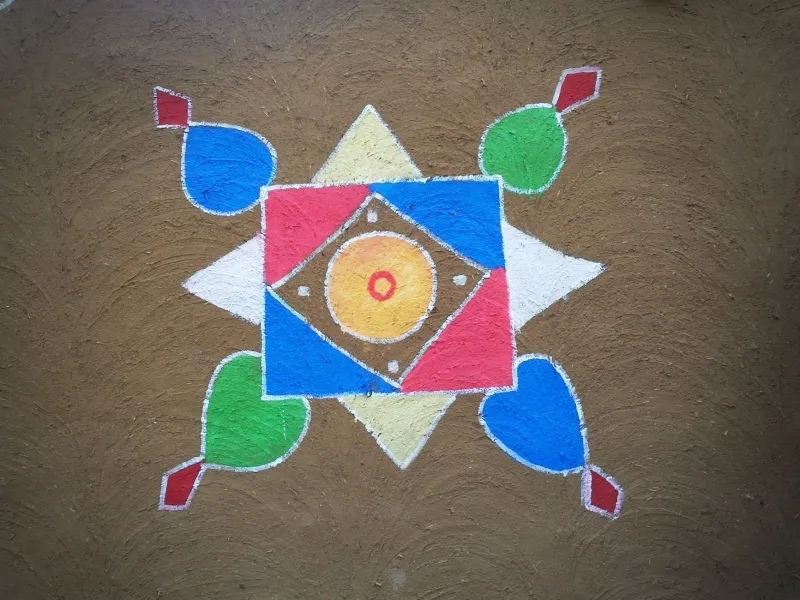
Rangoli isn't just pretty — it carries serious cultural weight. The tradition dates back thousands of years across the Indian subcontinent, with mentions in ancient Sanskrit texts. The word itself comes from the Sanskrit rangavalli, meaning "row of colors." Across different regions of India, it goes by different names — kolam in Tamil Nadu, alpana in West Bengal, muggu in Andhra Pradesh — but the spirit is the same: a decorative design made at the entrance of a home to welcome guests, honor deities, and invite good fortune.
In Mumbai and across Maharashtra, rangoli is especially tied to festivals like Diwali, Navratri, and Pongal. Women (and increasingly, everyone) would wake before dawn to lay out intricate geometric patterns on their doorsteps using dry rice flour, colored powder, or flower petals. The designs aren't just decorative — they're symbolic, with specific motifs representing prosperity, protection, and spiritual connection.
The catch? Rangoli is impermanent. It gets swept away, rained on, walked through. That's kind of the whole point. It's art made to exist in the moment.
Which, if you think about it, is basically the entire philosophy of short-form video content.
How Gen Z Found It (And Made It Their Own)
The rangoli-to-viral-content pipeline started quietly. A few years ago, Indian American creators began posting Diwali decoration videos that included rangoli-making, and the comment sections went absolutely feral. People who had never heard the word were tagging friends, asking for tutorials, and demanding more. The algorithm, ever hungry for visually rich content, did the rest.
What makes rangoli uniquely suited for the short-form era is the process itself. Watching someone pour colored powder through their fingers in controlled, deliberate movements hits the same part of your brain as ASMR, satisfying videos, and Bob Ross reruns. The symmetry is hypnotic. The color combinations — hot pink against saffron yellow, cobalt blue bleeding into white — are genuinely stunning. And the time-lapse format, where a blank floor transforms into an elaborate mandala in under 60 seconds, is basically engineered for the Reels format.
But Gen Z didn't just consume rangoli content — they started remixing it.
Creators in cities like New York, Los Angeles, Houston, and Chicago began experimenting with rangoli outside its traditional context. Some swapped colored powders for chalk or sand. Others incorporated LED lighting beneath translucent designs. Street artists started scaling rangoli-inspired patterns up to mural size, blending the geometric precision of traditional motifs with graffiti aesthetics. Home décor influencers began using rangoli techniques to create temporary floor art for parties and events, offering a sustainable, washable alternative to rugs or vinyl decals.
The hashtag #rangoli has racked up billions of views across platforms. #RangoliArt, #RangoliDesign, and #ModernRangoli aren't far behind.
The Artists Bridging Two Worlds
Among the American creators leading this wave, a handful stand out for the way they're honoring the tradition while pushing it into genuinely new territory.
Indian American artists who grew up making rangoli with their mothers and grandmothers are now teaching the basics to audiences who've never set foot in South Asia. Their tutorial videos double as cultural education — explaining the significance of lotus motifs, the meaning behind certain color choices during specific festivals, the meditative practice of working from the center outward. The comments sections of these videos are full of non-South Asian viewers expressing genuine awe and curiosity, asking questions, sharing their own attempts.
Then there's the crossover crowd: visual artists who discovered rangoli through social media and started blending it with their existing practices. Muralists incorporating rangoli geometry into large-scale public art. Interior designers using rangoli-style stencils to create statement floors in restaurants and boutiques. Even wedding planners have gotten in on it, offering rangoli installations as an alternative to floral arrangements for ceremonies that want a more tactile, culturally rich aesthetic.
What's notable is that the cultural exchange feels, for the most part, genuinely collaborative. South Asian creators are largely leading the conversation, setting the context, and welcoming curiosity rather than gatekeeping. The message seems to be: learn where this comes from, understand what it means, and then go make something beautiful.
Why Tactile Traditions Are Winning the Internet Right Now
There's a bigger story here about why visually rich, handmade traditions from South Asian culture keep breaking through on social media. In an era of AI-generated imagery and hyper-produced content, there's something almost radical about watching a human being create something intricate and beautiful using nothing but their hands and raw materials.
Rangoli is the opposite of digital. It's physical, temporary, and deeply human. You can feel the texture of the powder, smell the marigold petals, sense the concentration required to keep a line straight. Even through a screen, that tactile quality communicates — and it communicates loudly to a generation that grew up swiping through endless, frictionless content.
Mumbai's creative culture has always understood the power of spectacle. The city that gave the world Bollywood's elaborate song-and-dance sequences, that produces some of the most visually overwhelming film posters on the planet, that transforms entire neighborhoods into light installations during Diwali — Mumbai knows how to make people stop and stare. Rangoli is just the latest export carrying that energy into the global conversation.
Try It Before You Scroll Past It
If you've been watching rangoli videos on loop and haven't actually tried it yet, consider this your sign. You don't need special supplies — colored sand, chalk powder, or even salt can work for beginners. Start with a simple geometric pattern, work from the center outward, and don't stress about perfection. The whole point is the process.
And when you post it (because of course you're going to post it), maybe take a second to credit the tradition. Drop some context in the caption. Tag a South Asian creator whose tutorial helped you figure it out. The internet is better when the origins of things travel alongside the things themselves.
Rangoli has survived thousands of years of history. It'll survive going viral. But it deserves to be understood, not just aestheticized — and right now, Gen Z seems more than willing to do the work.