Vada Pav Over Volcano Rolls: How Mumbai Street Food Is Quietly Becoming America's Next Big Obsession
Vada Pav Over Volcano Rolls: How Mumbai Street Food Is Quietly Becoming America's Next Big Obsession
There's a line snaking out the door of a small pop-up in East Austin on a Thursday night. It's not ramen. It's not tacos. It's not even that fancy smash burger place everyone's been posting about. The crowd — a mix of college kids, food bloggers, and a group of office workers who clearly told their partners they'd be home by eight — is waiting for something they can barely pronounce. But they already know it's going to be worth it.
They're here for vada pav.
If that name doesn't ring a bell yet, don't worry. It will. Because what Mumbai has been quietly perfecting on its street corners for over a century is now crashing through the American food scene like a Bollywood entry sequence — loud, colorful, completely impossible to ignore, and somehow even better than you expected.
The Snack That Started It All
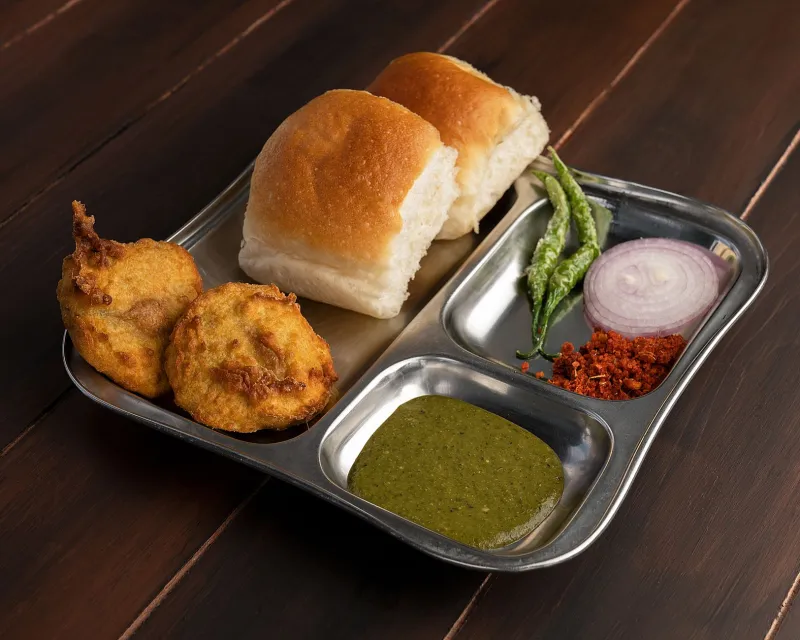
For the uninitiated: vada pav is Mumbai's answer to the burger. A spiced potato fritter, deep-fried until golden, tucked inside a soft white bun, and hit with multiple chutneys — tamarind, green chili, garlic — all at once. It costs roughly twenty rupees on a Mumbai sidewalk. In the US, it's showing up at weekend markets and restaurant menus priced at eight to twelve dollars, and people are genuinely not mad about it.
"The first time I had it, I just stood there for a second," says Mara Delgado, a food writer based in Chicago who first encountered vada pav at a pop-up last spring. "It's like a burger, but it's not. The textures, the heat, the tang from the chutney — it all hits in this rapid-fire sequence. I went back for a second one immediately."
Mara is not alone. Across major US cities — New York, LA, Houston, Chicago, Seattle — a new wave of desi street food is converting casual eaters into full-blown devotees, one crispy, chutney-drenched bite at a time.
Pani Puri as a Party Trick (and a Cocktail Bar Moment)
If vada pav is the gateway drug, pani puri is the deep end. These hollow, golf ball-sized fried shells get filled with spiced chickpeas or potatoes, then dunked in a bracingly cold, mint-and-tamarind-spiked water before landing directly in your mouth. The whole thing disappears in one bite. It is chaotic. It is messy. It is absolutely electric.
Bartenders have noticed.
In New York's Lower East Side, at least two cocktail bars have introduced pani puri-inspired drinks — small, shot-like pours built around tamarind syrup, black salt, and fresh mint that mimic the flavor punch of the original snack. One bar in Silver Lake, Los Angeles, went a step further and serves actual pani puri alongside their cocktail menu, with flavored waters ranging from classic jaljeera to a mango-chili variation that regulars are apparently fighting over.
"People want the experience," says Priya Nair, a Mumbai-born chef who runs a catering company in the Bay Area and recently launched a weekend street food pop-up in the Mission District. "Pani puri isn't just food — it's interactive. You're at a stall, the vendor is filling them one by one, you're eating fast, you're laughing. That energy translates, even in a restaurant setting."
Priya's pop-up, which she started as a pandemic-era side project, now has a waitlist that stretches weeks out. She's fielding calls from restaurant groups about a permanent location.
Why Now? Why This?
American food culture has been on a slow, steady sprint toward bold for years now. The sriracha era. The Korean BBQ boom. The birria taco takeover. Each wave pushed the needle further toward complex heat, fermented depth, and layered flavor profiles. Mumbai street food fits that trajectory so perfectly it almost feels inevitable.
"There's a sophistication to the spicing that people are responding to," says culinary instructor and food anthropologist James Whitfield, who teaches a course on global street food traditions at a culinary school in Philadelphia. "It's not just hot. It's hot and sour and sweet and savory, sometimes all in the same bite. That complexity is what a lot of American diners have been chasing without necessarily knowing what to call it."
Social media has done its part, too. Mumbai street food is extraordinarily visual — the sizzle of bhel puri being tossed in a steel bowl, the theatrical dunk of pani puri, the vivid orange of a perfectly fried samosa — and creators have leaned in hard. TikTok and Instagram Reels are full of American foodies documenting their first encounters with sev puri, dabeli, and keema pav, often with the kind of wide-eyed, slightly overwhelmed reaction content that algorithms absolutely love.
The Home Cook Revolution
Beyond restaurants and pop-ups, something interesting is happening in American kitchens. Mumbai street food recipes are spiking on cooking platforms and YouTube channels. Searches for tamarind chutney, chaat masala, and puri dough have climbed steadily over the past two years, according to data from several major grocery and recipe apps.
Derek Hoffman, a home cook in Denver who runs a modest food blog, posted a vada pav recipe last fall that ended up going viral — over two million views and counting. "I expected maybe my usual few thousand viewers," he says, still a little stunned by it. "But people went crazy. I got messages from all over the country from people saying they'd never heard of it and now they're making it every week."
Derek has since posted recipes for pav bhaji, misal pav, and a simplified pani puri kit that he says is his most-saved post ever. "Mumbai street food is genuinely accessible once you track down a few key ingredients. And once people taste it, they're hooked."
The Vibe Is the Point
Here's the thing about Mumbai street food that no one fully explains until you've experienced it: it's not just about what you're eating. It's about how you're eating it. Standing at a stall. Elbow to elbow with strangers. Moving fast, tasting everything, spending almost nothing. There's a democratic, joyful chaos to it that feels like a direct antidote to the overly curated, $22-cocktail dining experiences that have dominated American food culture for the last decade.
Chef Priya puts it simply: "Mumbai street food is alive. It has energy. People feel that."
American foodies, it turns out, have been hungry for exactly that — something that tastes like a discovery, something that has a story, something that makes a regular Friday night feel like an adventure.
Sushi will always have a place at the table. But right now, the most exciting seat in the American food conversation belongs to a little potato-stuffed bun from the streets of Mumbai. And something tells us it's not giving that seat up anytime soon.